Congratulations to Dr. Leah Sherman, who defended her dissertation “Echoes of Discord, Visions of Unity: UNESCO and the Emergence of Cultural Heritage” under the direction of Dr. Adam Jolles in the fall of 2025.
Dr. Sherman’s academic journey began at FSU, where she earned her BA (2010) and MA (2012) in Art History. Her master’s thesis, Institution versus Individuality: Rethinking Unity in Early Italian Futurism, examined tensions within first-generation Italian Futurist painting and sparked her ongoing interest in twentieth-century visual and material culture. In 2016 she completed an MLIS and joined the faculty at Florida State University Libraries.
Dr. Sherman’s dissertation presents a dual critical history of the United Nations Educational, Scientific and Cultural Organization (UNESCO) and the very concept of cultural heritage, focusing on the mid-20th century as a formative period for both entities. Leah traces how UNESCO helped define and professionalize cultural heritage as it’s understood today in cultural institutions like museums, libraries, and archives.
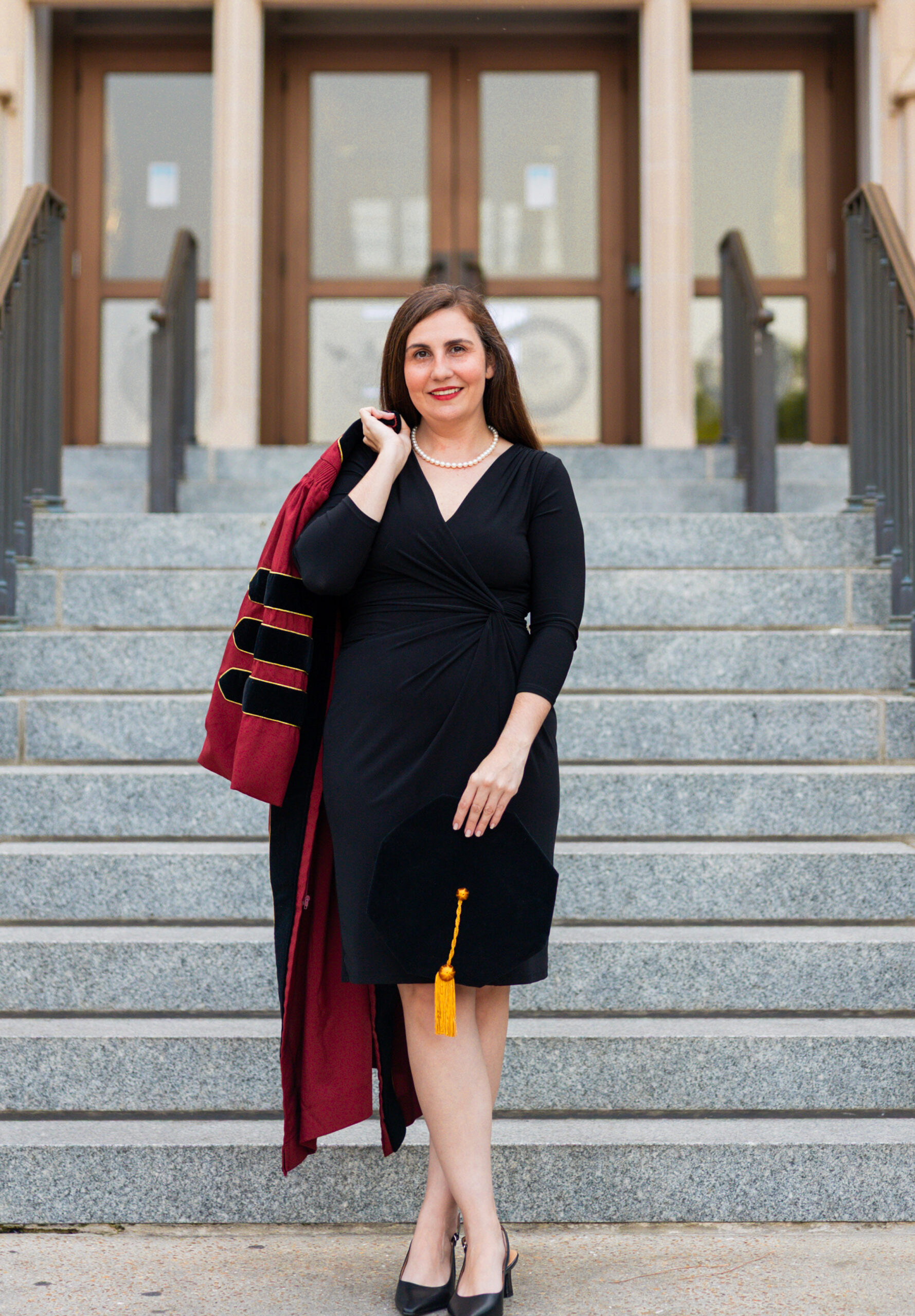
Beginning with UNESCO’s founding in 1945, each chapter examines a key moment that shaped the Organization’s development and the modern idea of heritage, concluding in 1980 with the International Campaign to Save the Monuments of Nubia. Though organized chronologically, this dissertation is not simply a historical overview but rather argues that UNESCO has evolved into a leading international cultural actor during these decades through three distinct, interconnected eras by leveraging its work with cultural heritage.

Leah’s advisor Dr. Adam Jolles writes:
“Leah’s dissertation is the first of its kind in our department—an in-depth, interdisciplinary examination of the historical emergence of cultural heritage—and it is a major contribution to the field, on a par with earlier, pivotal studies by Elizabeth Keogh and Lynn Meskel. Leah addressed in particular how UNESCO critically shaped this discourse, and infused it with all the political intrigue inherent to the Cold War era.
Her dissertation committee members and I were deeply impressed by the ambitious scope of her research, from her meticulous examination of the UNESCO archives in Paris to the way she scrutinized the institution’s foundational museological journals. She structured her study around UNESCO’s defining early bureaucratic moments—the First General Conference in 1946, the Human Rights Exhibition of 1949; the 1954 Hague Convention for the Protection of Cultural Property in the Event of Armed Conflict; and the 1972 World Heritage Program—addressing the significance of those events both broadly (in terms of the rise of cultural heritage practice) and narrowly (in terms of the evolution of UNESCO). Leah demonstrated that far from the immutable doctrine that so many scholars assume that it is, cultural heritage has always possessed rapidly shifting contours subject to the vagaries of diplomatic maneuvering. It’s also worth noting that Leah’s dissertation provides something of a model for how to integrate art history, museum studies, and international cultural policy in a focused and productive way, thereby directing not just the discipline but the Humanities in general toward a more holistic and interdisciplinary future.”
Leah has conducted research at major museums and archives in the U.S. and Europe, including MoMA, the Getty Research Institute, and UNESCO’s archives in Paris. Proficient in Italian and French, she brings an international perspective to her work, which has been presented and published in both national and international forums. As part of her doctoral research, Leah took a leave from FSU Libraries to embark on a month-long research trip to archives and museums in Europe, generously funded by the Mason Dissertation Research Award. She spent several weeks at the UNESCO Archives and the International Council of Museums (ICOM) Archives in Paris and conducted supplemental research in Florence and Genoa on postwar museums in Italy.
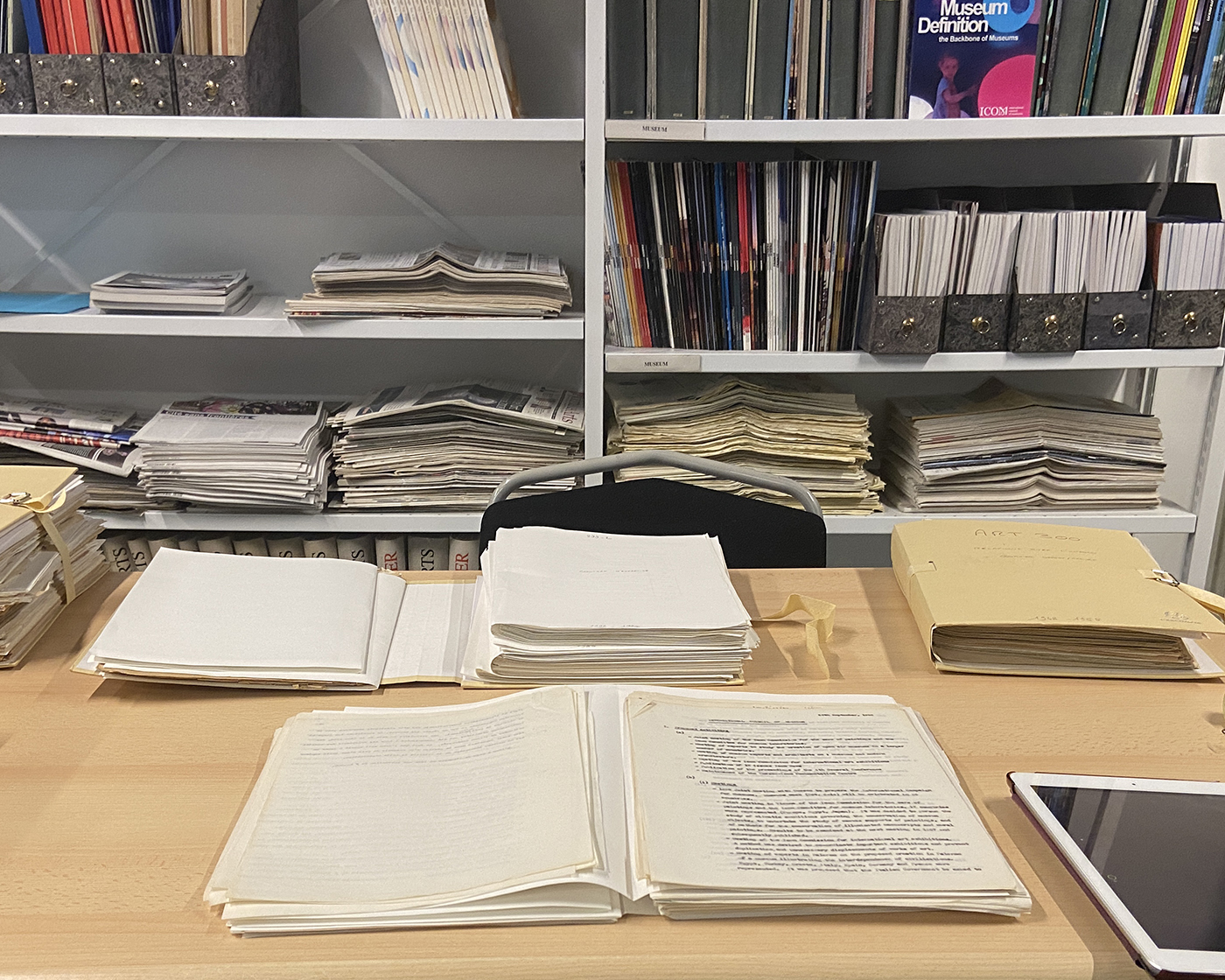
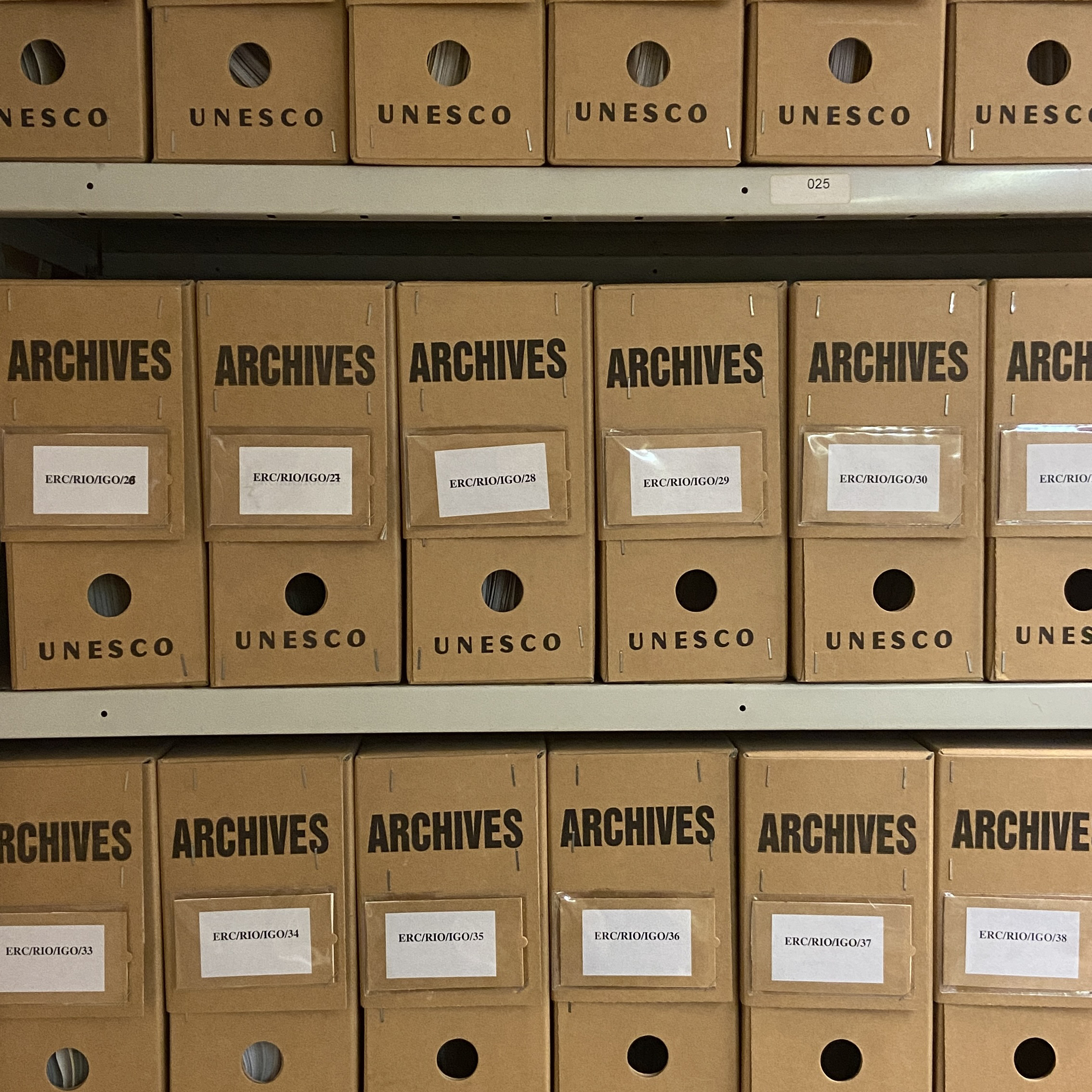
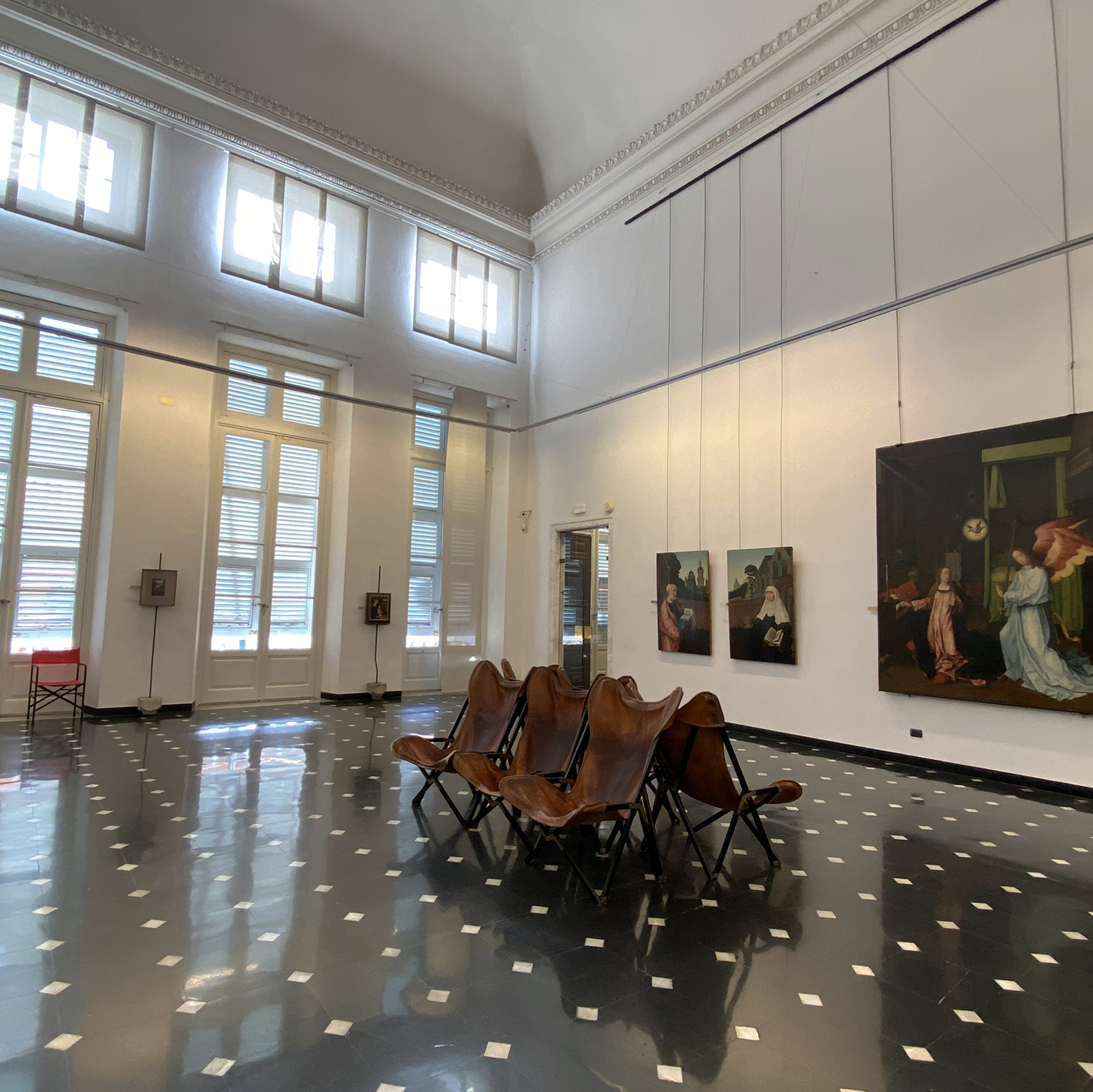
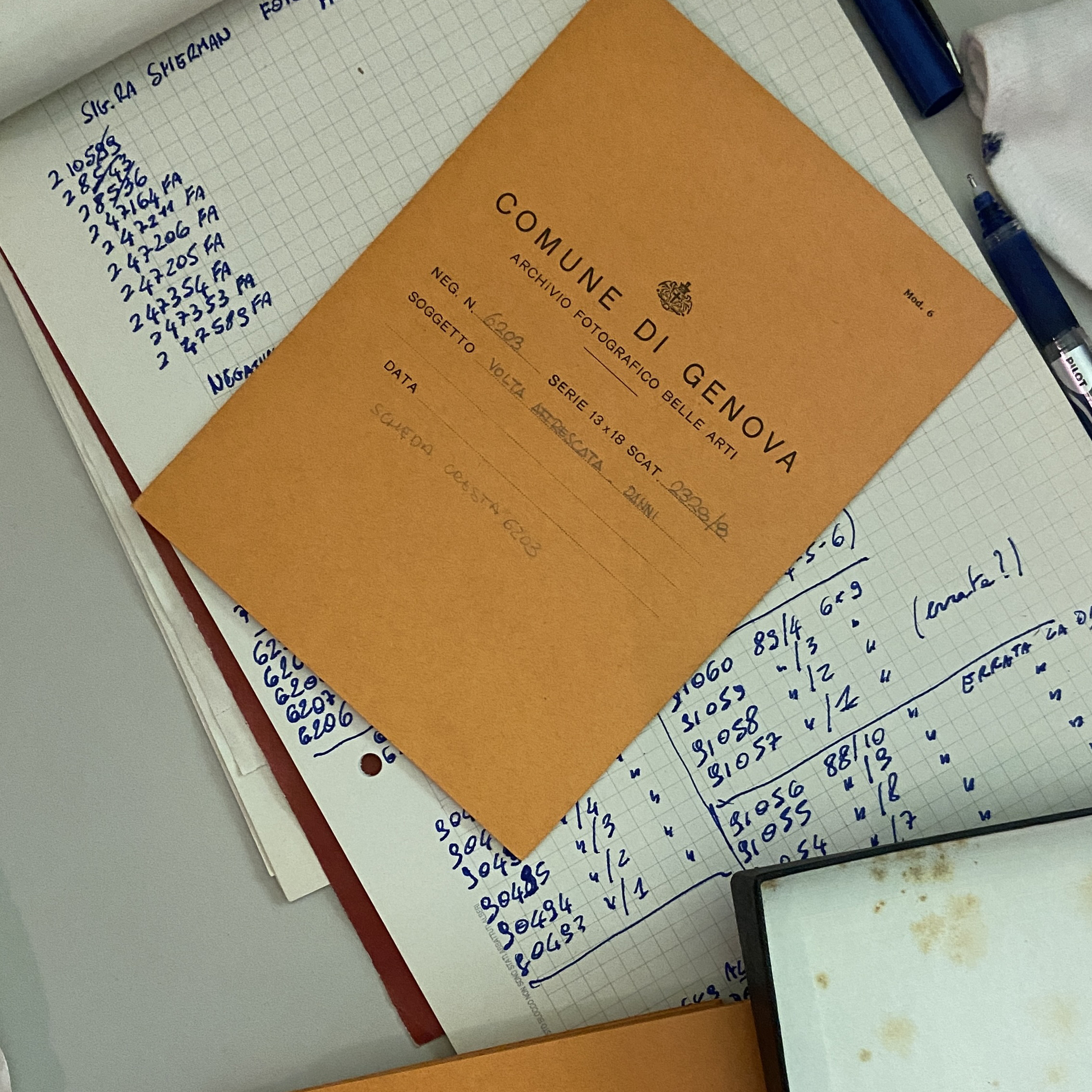
Leah writes about her research experience,
“Working on this dissertation was especially meaningful because it brought together both sides of my professional life, as an art historian and an arts librarian. Instead of just studying cultural heritage from afar, I could test ideas I’d long considered about how institutions and global policy shape it, and I ultimately imbued those insights into my manuscript. Traveling to the UNESCO and ICOM archives in Paris and researching postwar museums in Italy ultimately gave me the material to tell that story and tie together these various streams of inquiry and experience. For me, this dissertation wasn’t just academic, but it was also personal, because I see every day how these concepts influence the work we do in libraries and cultural spaces today, not just in the historical past.”
Of her committee chair she writes,
“I’m profoundly grateful to Dr. Adam Jolles, who has been my advisor throughout my entire career at FSU, culminating in this terminal degree. From the start, he challenged me to think critically about the big questions at the heart of this dissertation and guided me through them with clarity and confidence. His guidance has shaped not only this project but the way I approach research and teaching. The example he sets as an educator, a researcher, and as a colleague continues to inspire me as I grow into my own role as faculty. I would not be the scholar or the person I am today without his support, mentorship, and friendship.”
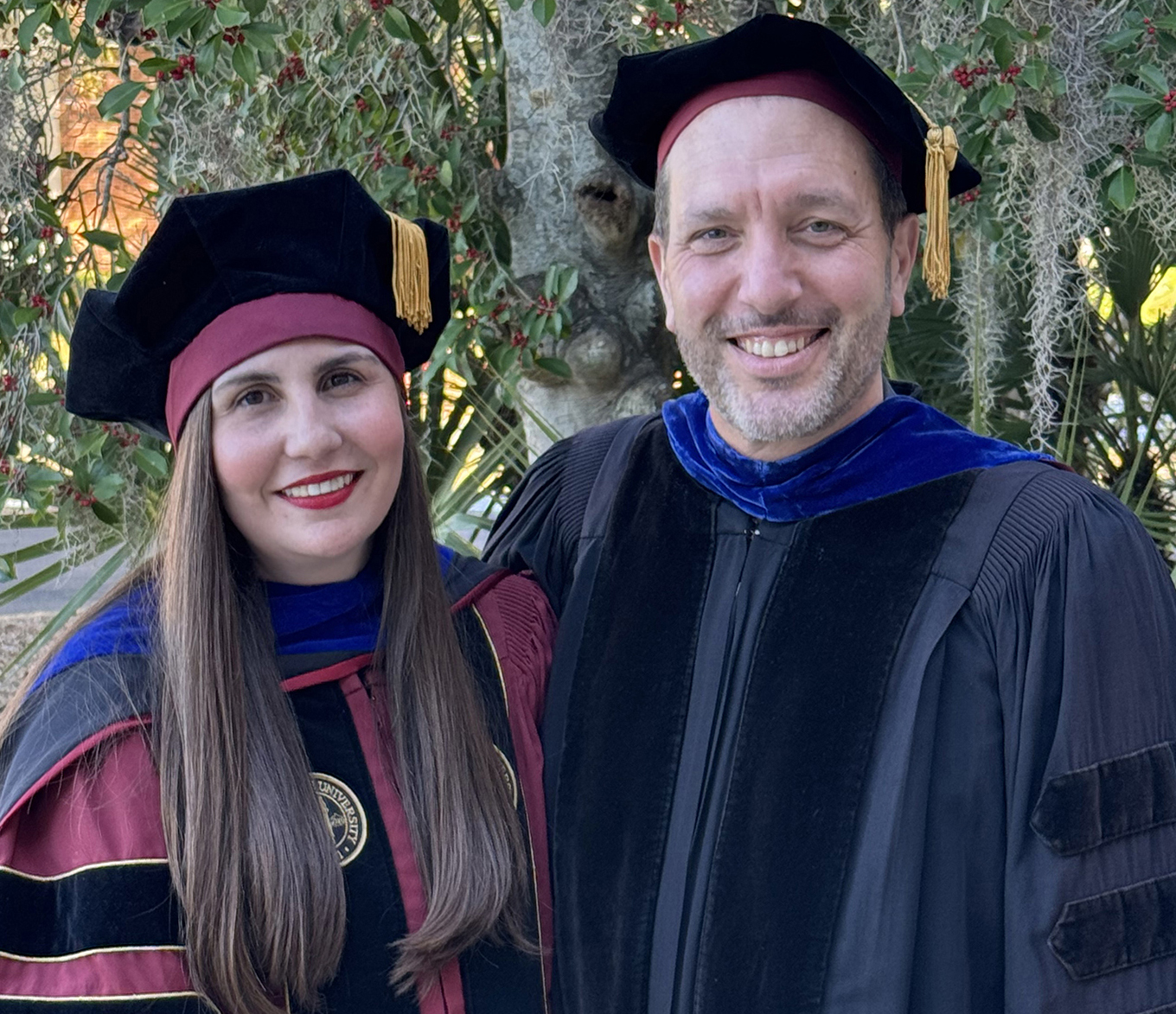
Since 2022, Dr. Sherman has been Instructor of Record for ARH 2814: Cultural Heritage in the Digital Age in the Department of Art History at Florida State. This course introduces students to the intersection of cultural heritage and the digital realm, showing undergraduates across all majors that cultural heritage is full of fascinating dichotomies: theory and practice, physical and digital, historical and current. Leah’s goal is for students to leave the course with the understanding that everyone has a stake in cultural heritage, whether as creators, consumers, or stewards of culture. Her teaching emphasizes critical thinking and interdisciplinary approaches, blending art historical scholarship with contemporary debates in both heritage and information studies.
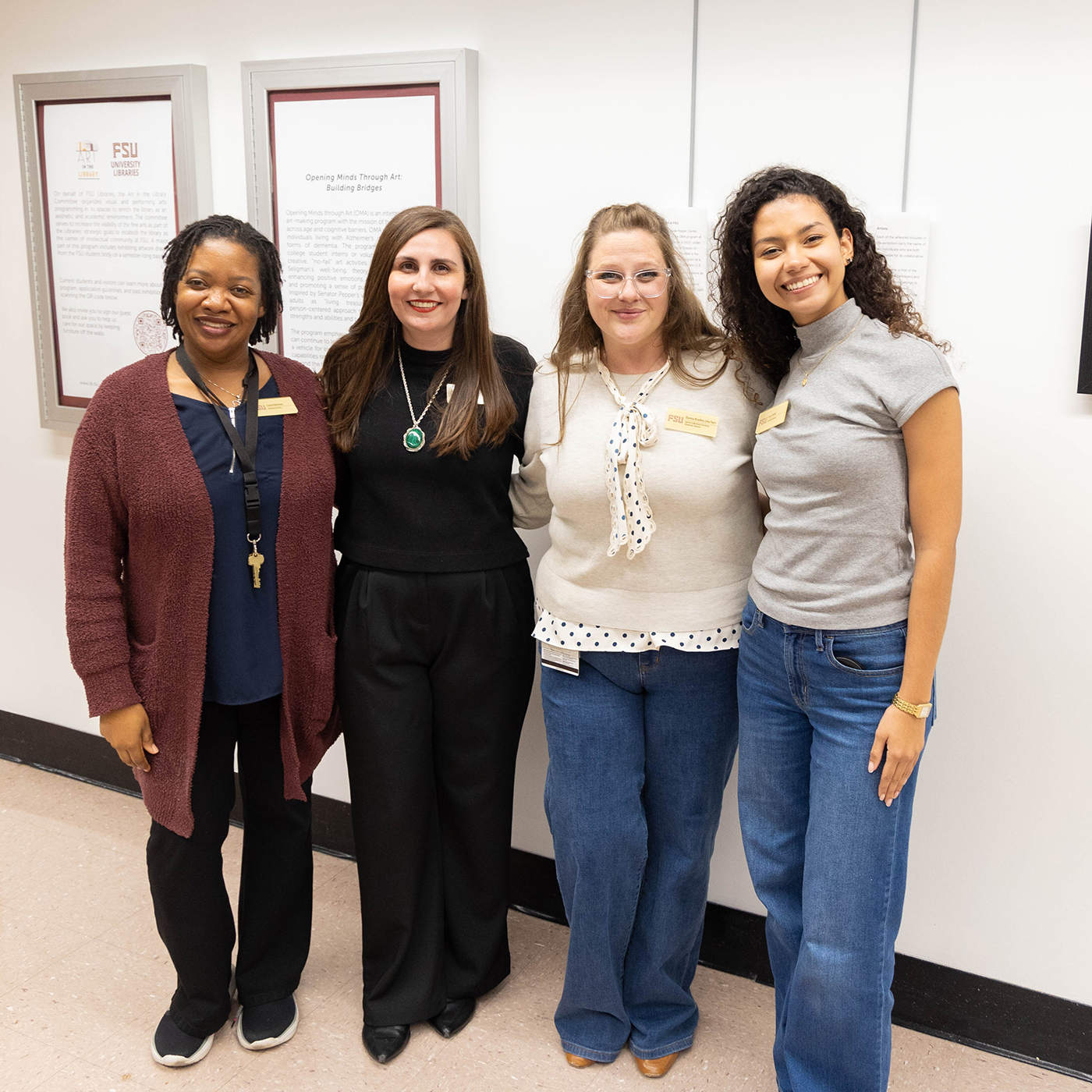
In addition to her scholarly achievements, Leah holds the rank of University Librarian, the highest faculty rank at FSU Libraries, where she is the Visual & Performing Arts Librarian. In this role, she is the liaison to the FSU College of Fine Arts, the FSU Museum of Fine Arts, the Ringling Museum in Sarasota, and the FSU Master Craftsman Studio, overseeing reference services, instruction, and collections management for the fine arts disciplines. There she also chairs the Art in the Library program, curating exhibitions and organizing events that bring student creativity into library spaces and create new professional opportunities for the Florida State artistic community. Beyond campus, Leah has been an active leader in arts librarianship for over a decade, holding numerous regional, national, and international leadership roles, including President of the ARLIS/Southeast Chapter and various liaison positions within the Art Libraries Society of North America and the Association of College & Research Libraries.
Her participation at two Architecture, Media, Politics, Society (AMPS) conferences in 2023 and 2024 was supported by the department’s Helen J. Beard Conference Travel Grant, where she presented papers on postwar museum practices and cultural heritage. Leah’s recent publications also include the peer reviewed article “Embracing the Museum Criterion: Caterina Marcenaro and Franco Albini at the Palazzo Bianco” in Urban Futures – Cultural Pasts: The Heritage of People & Place (2025) and the book chapter “Taking the Museum to the People: Cultural Heritage, Community Engagement, and Postwar Poland’s Museobus” in the forthcoming Museums – Places of Time, People, and Memory. In addition to her research and writing, Leah has served repeatedly as a peer reviewer for several journals, including Athanor, since 2021.