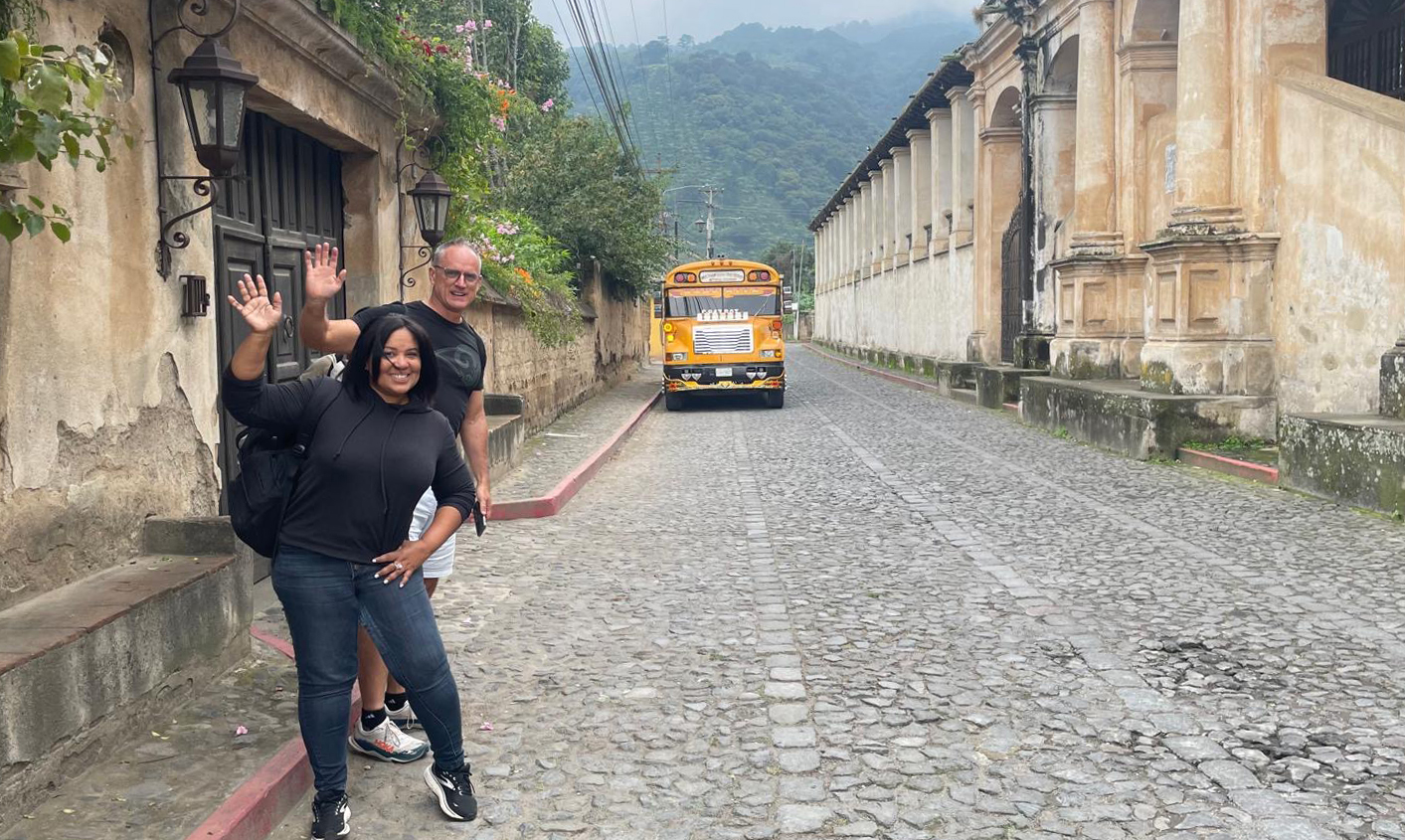
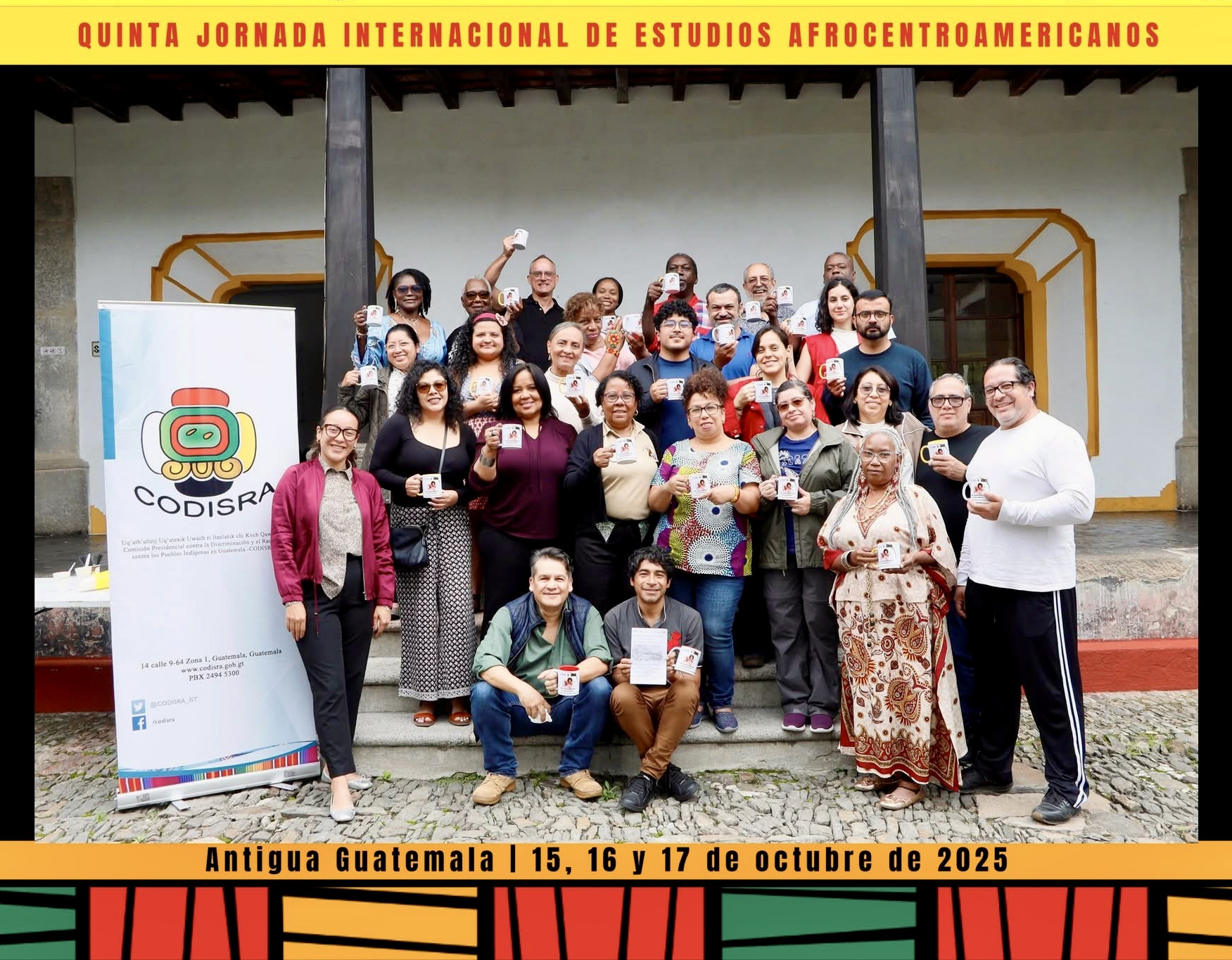
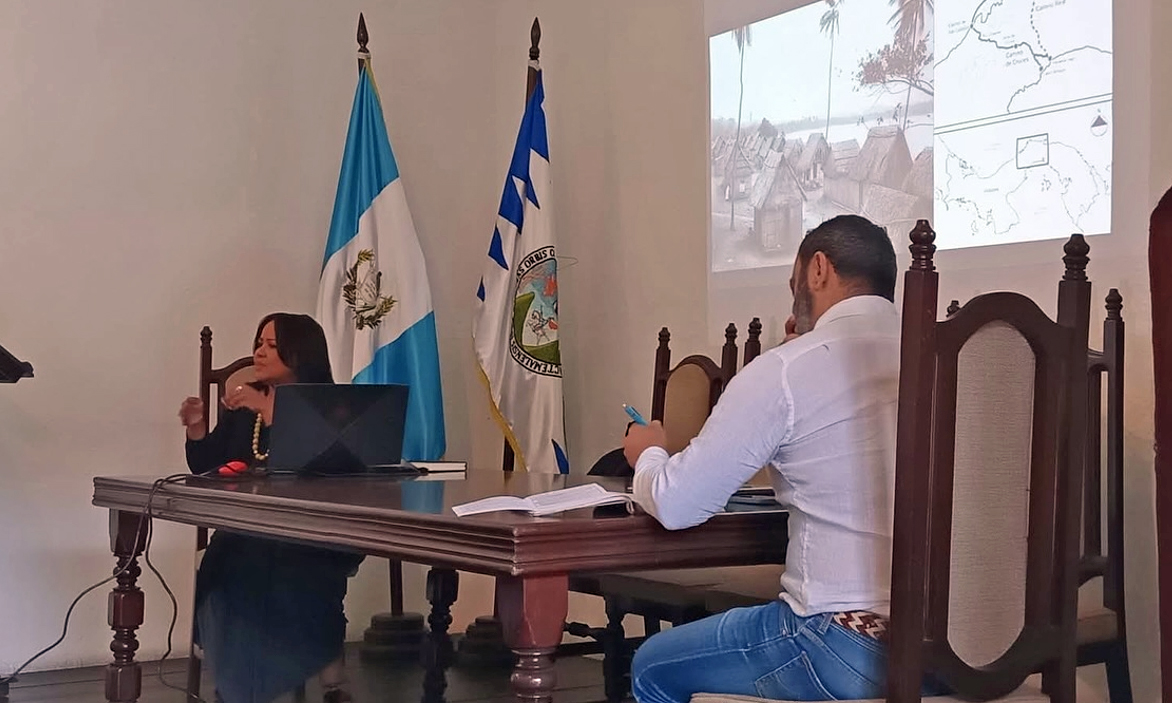
Art History doctoral candidate Ileana Olmos, who serves as Curator and Education Director of the John G. Riley Center and Museum in Tallahassee, traveled to Guatemala in the fall to presented her paper “Resistencias visibles: mujeres, palenque y soberanía visual en el Juego de los Congos de Nombre de Dios, Panamá” (“Visible Resistances: Women, the Palenque, and Visual Sovereignty in the Congo and Devils Tradition of Nombre de Dios, Panama”) at the 5th International Conference on Afro–Central American Studies.
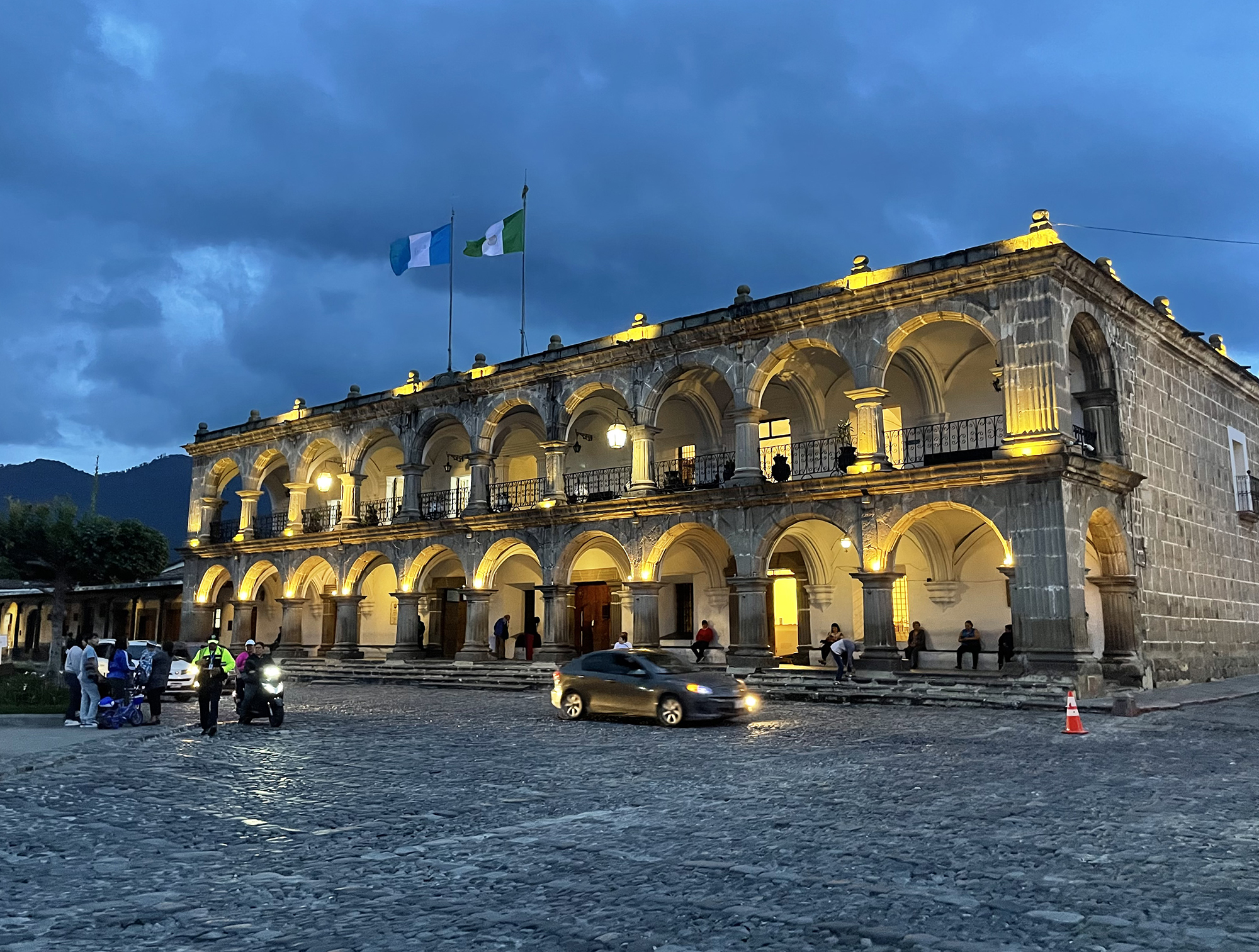
The conference, held in Antigua, Guatemala, was organized by the Network of Afro–Central American Studies (in Spanish, Red de Estudios Afrocentroamericanos or REAC) and hosted by the University of San Carlos of Guatemala. REAC brings together researchers, scholars, and members of Afro-descendant civil organizations and communities across the Americas to explore African-descendant histories, identities, and cultural expressions.
Ileana’s presentation was part of the panel History and Identities in the 18th–20th Centuries. In the paper, she examined women’s leadership, sacred space, and visual sovereignty within the Congo tradition of Panama.
This research forms part of her doctoral dissertation, which investigates the visual, material, and spatial dimensions of the Congo and Devils tradition, a ritual performance rooted in sixteenth-century Afro-Atlantic maroon communities and practiced annually during the period coinciding with Panama’s national Carnival, with particular emphasis on women’s leadership, ritual authority, and the governance of sacred space.
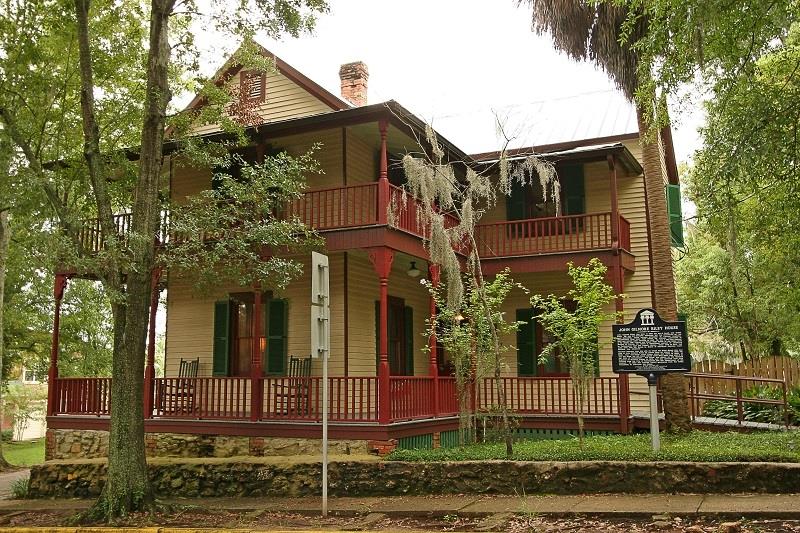
Attention to space, preservation, and interpretation is central to Ileana’s professional practice at the Riley Center & Museum, where she oversees exhibitions, educational programs, and community outreach. The Riley Museum, listed on the National Register of Historic Places, explores African American histories in Tallahassee from the pre-Antebellum era to the present. Exhibitions and events highlight John G. Riley’s legacy as an educator, civil rights advocate, and themes surrounding African American historical experiences in Tallahassee.
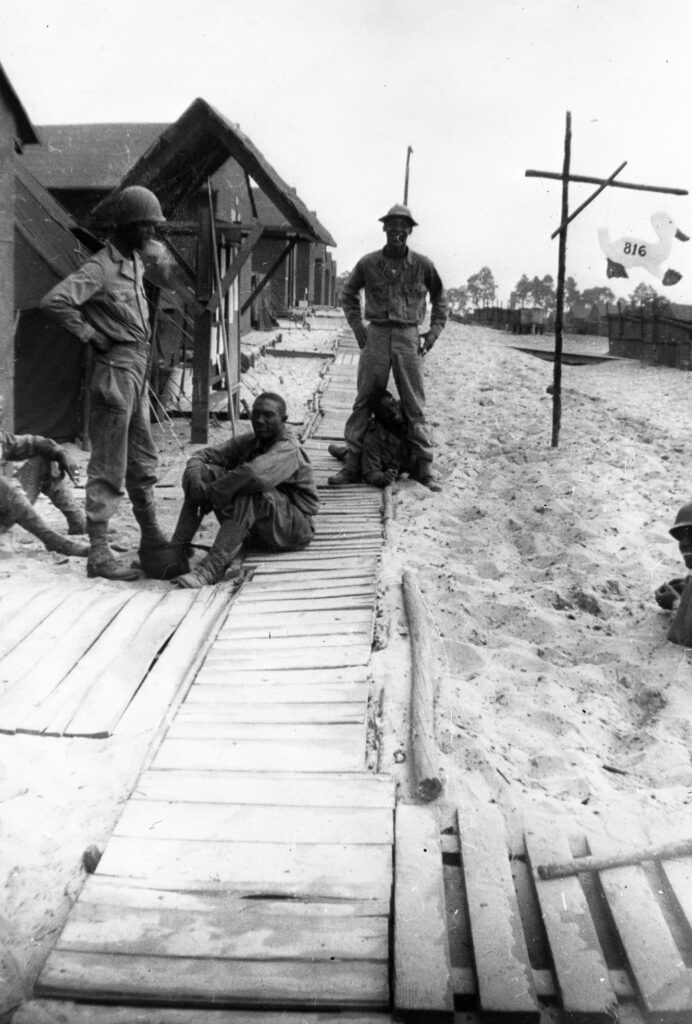
This spring, the Riley Museum features the exhibition Tallahassee: The World Wars and Post-War Life, exploring the experiences of African Americans in Tallahassee from World War I through World War II and into post-war life, highlighting military service, life on the home front, and the lasting impact of global conflict on the local community.
When planning the exhibition, Olmos focused on the lives of people connected to the wars – those who served abroad and those who stayed on the home front. She was recently featured in the Tallahassee Democrat and interviewed by the Council on Culture & Arts about her work on the exhibition. “Our goal is not to talk about the war in an abstract or technical way,” she explains. “Our purpose is to humanize these wars through the experiences of African Americans. There is so much untold history in that perspective, and that’s what we want to bring forward.”
Ileana’s background in historic preservation and archaeological conservation and her expertise as a scholar come together in her stewardship of the Riley Museum. Through historic preservation and visual storytelling, the museum fosters community engagement and supports the preservation of local history.