Student and Faculty Travels, Exhibitions, Presentations, and Publications
Fall 2026
Looking for internships, jobs, or opportunities to prepare and present your research? Keep an eye on our Opportunity Blog and check the Funding page for internal and external financial support options.
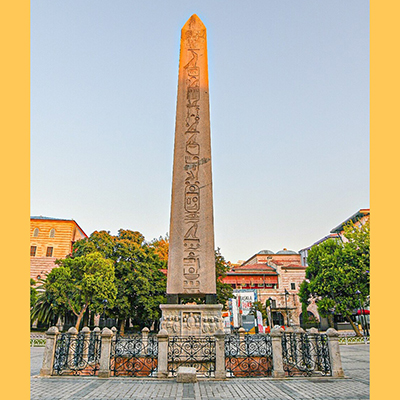
Doctoral candidate Madison Gilmore-Duffey has been awarded a fellowship as a member of the inaugural 2026–2027 class of Dissertation Fellows at FSU’s new Humanities Center. The Humanities Center brings together scholars from diverse disciplines to engage and inspire each other’s research. This year’s topic is “The Human in the Humanities.” Madison’s dissertation, “The Classical Past in the Art of Late Antique Byzantium,” examines how antiquities—objects predating the 4th century CE—served as visual displays of historical narrative in the Hippodrome of Late Antique Constantinople. She demonstrates how these objects’ meanings emerged through the reciprocal relationship between viewer and object.

Associate Professor Tenley Bick has several presentations in 2026:
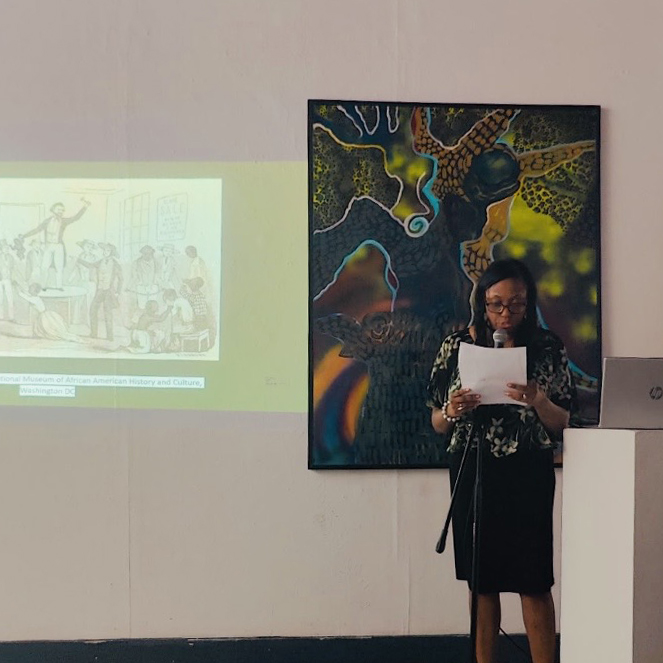
- This summer, she presented “’Visualizzare una rappresentazione di soggetti neri all’interno del territorio italiano’: On Italian Landscape, Race, and Environmental Vision in the Work of Silvia Rosi” at the American Association for Italian Studies Conference in Sassari, Sardinia, Italy.
- She also has an upcoming invited international guest lecture, based on her published research on the work of contemporary Italian-Togolese artist Silvia Rosi, to be given virtually to the Department of Humanities, Università degli Studi di Trento (Italy), on October 1 at 10am EST, as part of the series Confini instabili (Unstable Borders), with scientific organization by Serena Luzzi and Denis Viva. The lecture is entitled: “La fotografia italiana, la diaspora, e l’Italia nella ricerca artistica di Silvia Rosi.”
- Dr. Bick will also present a guest lecture and book talk on Michelangelo Pistoletto: Figuration and Cultural Politics (Yale University Press, 2025) in the Department of Modern Languages and Linguistics at FSU, to be held October 19 at 5 pm. Earlier this year, Dr. Bick’s book was awarded the prestigious American Association for Italian Studies (AAIS) Book Prize, in the category of Visual Studies; read more here.
Associate Professor Paul Niell co-edited “Black Artists in the Atlantic World,” a special issue of Arts, with FSU Art History alumna Emily K. Thames (PhD ’22), Assistant Professor of Art History, University of Arkansas, Little Rock. This special issue considers the long arc of artistic production by Black artists in the Atlantic World from the seventeenth to the twentieth centuries. Articles focus on a range of places, including Mexico City; Salvador de Bahia, Brazil; Lima, Trujillo, and the Nazca region of Peru; San Juan, Puerto Rico; Washington, DC, Philadelphia, and Boston in the US; among others. Among the authors is another FSU Art History alumna, Kristi M. Peterson (PhD ’17), Assistant Professor of Art History at Skidmore College. The variety of case studies reveals striking comparisons between the lives and work of Black artists who struggled, persevered, and shaped the representational landscapes of the Atlantic World.
- “Guido Reni Social,” at the conference “Interpretare Guido Reni: Contesti, Funzioni, Significati,” Galleria Nazionale di Palazzo Barberini, Rome (May 21, 2026).
- Keynote lecture: “Peintures épistémiques: Le Portrait d’Antonietta Gonzalez par Lavinia Fontana et le Portrait de Maddalena Ventura par Jusepe de Ribera,” at the Université d’Été, Institut national d’histoire de l’Art, Paris (July 9, 2026).
- “Pleasure and Horror: on Jusepe de Ribera’s Two Versions of Apollo and Marsyas,” at the international conference “Pleasure as the Aim of Art? The Place of Pleasure in Seventeenth-Century: European Art Theory and Practice,” University of Lausanne, Switzerland (November 27, 2026).
- “From Estampa to Bosquejo: Francisco de Zurbarán and the Palimpsest of Painting,” international conference “Zurbarán et le Paradigme de l’Artist Dévot,” Musée du Louvre, Paris (January 20, 2027).
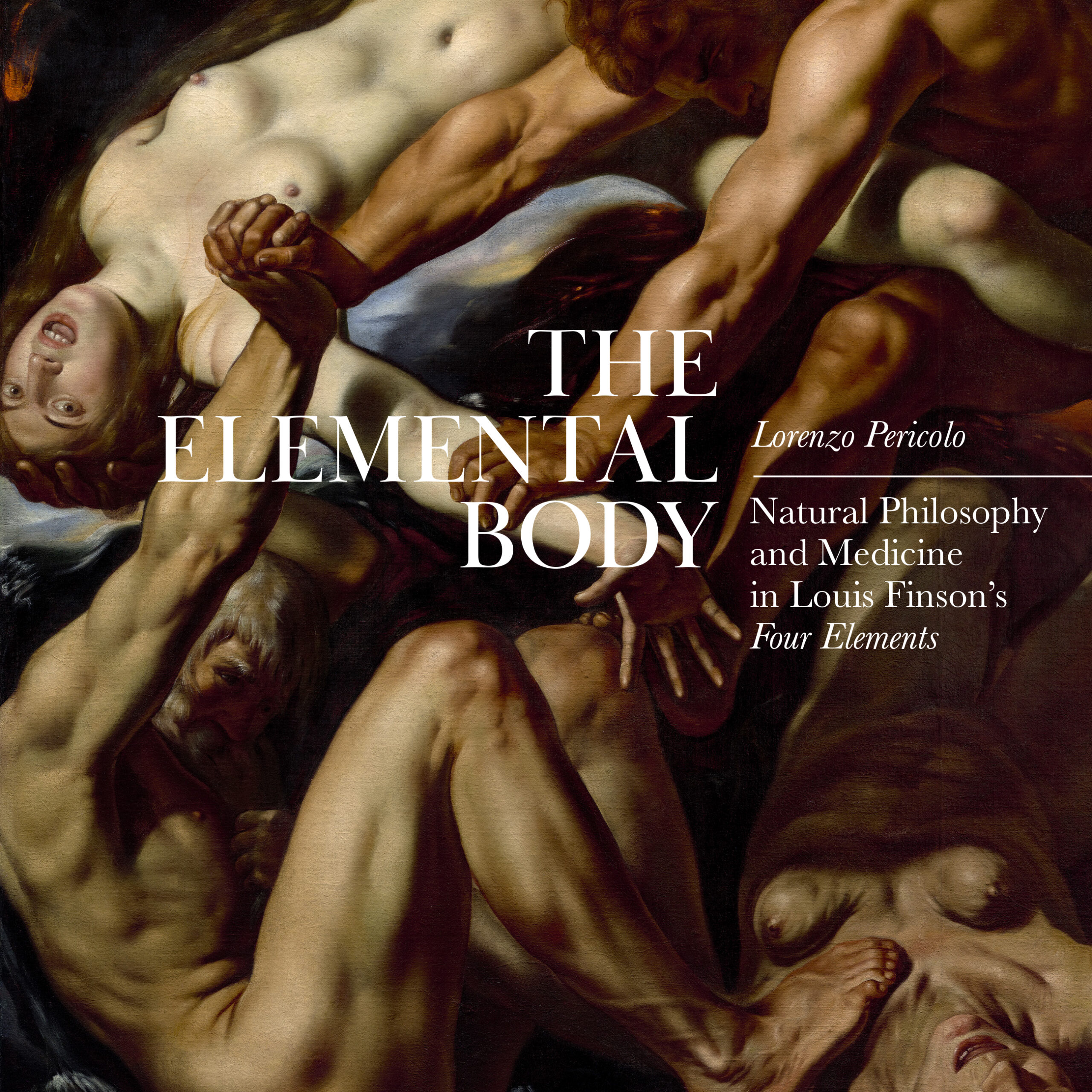
His new book, The Elemental Body: Natural Philosophy and Medicine in Louis Finson’s Four Elements, will be published in December, 2026, by Brepols Publishing.